I'll research the SERP landscape before revising. Let me verify current small claims limits, the Purchaser Dwelling Act notice rules, and Recovery Fund caps. Let me confirm the Recovery Fund cap, Maricopa justice court fees, and Glendale permit inspection details.
Can you sue a general contractor in Glendale, AZ? Usually yes, if you can show a real financial loss and you act inside Arizona's deadlines. Most contractor disputes travel one of three routes: a complaint with the state licensing agency, small claims court, or a civil suit in Superior Court, and picking the wrong one costs you months.
Can You Sue a General Contractor for Bad Work in Glendale, AZ?
Yes. Any time a contractor in Arizona causes another party to suffer physical or economic damages, they may be held civilly liable.
You do not need to prove fraud or bad intent. A broken promise plus a measurable loss is often enough.
The fact patterns repeat themselves:
- The contractor abandoned the job mid-project.
- Deadlines in the contract came and went with no progress.
- A deposit was taken and only part of the work was finished.
- Billing ran far past the contract price with no signed change order.
- The work failed a City of Glendale inspection.
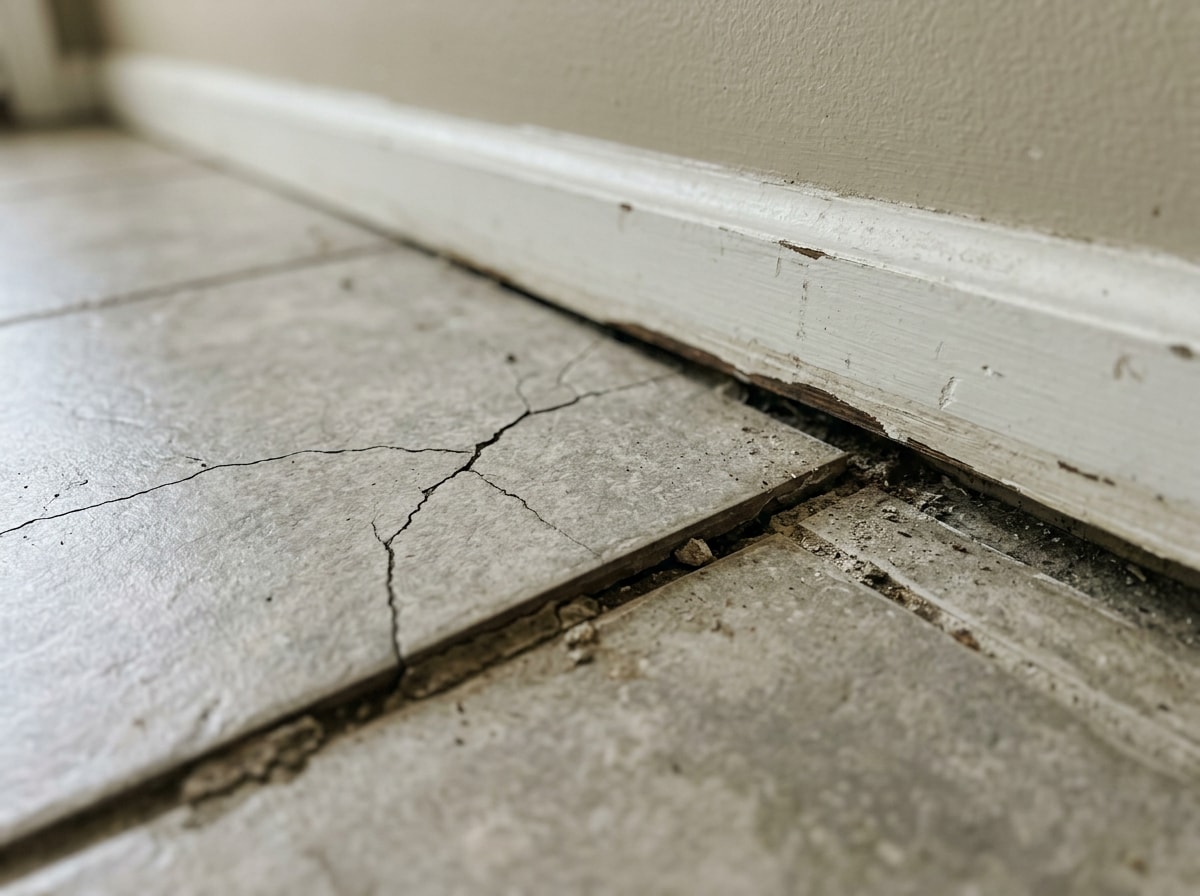
"Bad work" is not a matter of taste. Substandard workmanship gets measured against your written contract, applicable building codes, and accepted trade standards. When an ROC investigator inspects a jobsite, the test is whether the work meets minimum industry standards, and if it does not, the investigator may issue a written directive.
Because Glendale sits in Maricopa County, a lawsuit typically belongs in a Maricopa County Justice Court or Maricopa County Superior Court.
Your Three Routes Compared
Most homeowners pick a route emotionally. Pick it by what you actually want back.
| Route | Best for | What you can recover | Deadline to start |
|---|---|---|---|
| ROC complaint | Licensed contractor, work still fixable | Corrective work order, license discipline, then Recovery Fund eligibility | 2 years from completion, escrow close, or occupancy |
| Small claims (Justice Court) | Losses inside the jurisdictional cap, no attorney | Money only, up to the cap | 6 years written contract, 3 years oral |
| Superior Court civil suit | Large defect, structural damage, attorney fees at stake | Repair cost, consequential damages, possible fee award | Same statutes, plus 8-year repose limit |
One point most guides miss: the routes are not mutually exclusive. The ROC has authority to investigate complaints involving unlicensed work, and these are separate processes where pursuing one does not preclude the other.
Common Legal Claims Filed Against Contractors in Arizona
One bad job usually supports more than one cause of action. The theory you plead changes both your damages and your deadline.
Breach of Contract
Breach of contract is the backbone of nearly every construction dispute.
To win, you generally prove four things: an enforceable contract existed, you performed your side (usually by paying), the contractor failed to perform, and that failure caused you damages.
Damages are typically the cost to repair or complete the work, not your frustration. Keep the math tied to invoices and estimates.
Breach of Express or Implied Warranty
Even when your paperwork says nothing about warranties, Arizona law implies one.
In Arizona, workmanship and habitability are considered one warranty. The standard for satisfying it is reasonableness and not perfection, and the test is whether the work is comparable to work ordinarily done by a worker of average skill and intelligence.
An express warranty is different. It is whatever your contract or warranty document actually says, such as a two-year promise on a roof. You can pursue both theories at once, and the implied warranty often outlives an expired express one.
Negligence and Consumer Fraud
Negligence fits when a contractor's failure to use reasonable care causes bodily injury or property damage beyond the defective work itself. A burst supply line that soaks flooring and drywall is the classic example, and that is often when we get the water damage restoration) call before anyone has called a lawyer.
A pure "the work is bad" dispute is usually a contract case, not a tort case, because Arizona limits recovery of purely economic losses in negligence.
Where a contractor misrepresented their skills or the quality of their work, a claim under the Arizona Consumer Fraud Act may also be available. That claim carries its own shorter deadline.
Before You Sue: Notice, Inspection, and the Right to Repair
Arizona front-loads this fight, and skipping the front end is how good cases die.
Before filing a dwelling action, the purchaser must give written notice by certified mail, return receipt requested, to the seller specifying in reasonable detail the basis of the action. The statutory text and timing live on the Arizona State Legislature's page for A.R.S. 12-1363.
What Happens After You Send Notice
The seller may inspect the dwelling and has 60 days from the date of notice to state its intent to repair, replace, or pay for repair of the alleged defects, describing in reasonable detail what it will fix and by when.
If the seller does not provide a written response within sixty days, the purchaser may file a dwelling action.
Document every inspection visit and every repair attempt. Photograph the repair before, during, and after.
One caveat worth knowing: this notice process governs civil lawsuits. It is not a prerequisite to filing an administrative complaint with the Registrar of Contractors, so the ROC track can run while the notice clock ticks.
Evidence That Actually Wins These Cases
Judges and ROC investigators decide on documents, not outrage. Build the file first:
- The signed contract and every change order. This sets the standard the work is measured against.
- All payment records, including canceled checks, card statements, and transfer confirmations.
- Date-stamped photos and video at each stage, showing when the defect appeared.
- Every text, email, and voicemail transcript, which establishes notice and the contractor's own admissions.
- A dated printout of the license lookup result.
- Two or three independent repair estimates from licensed contractors.
That last item is not optional if you ever reach the Recovery Fund. Proof of cost for an unrepaired project may be established by submitting three bids from licensed residential contractors.
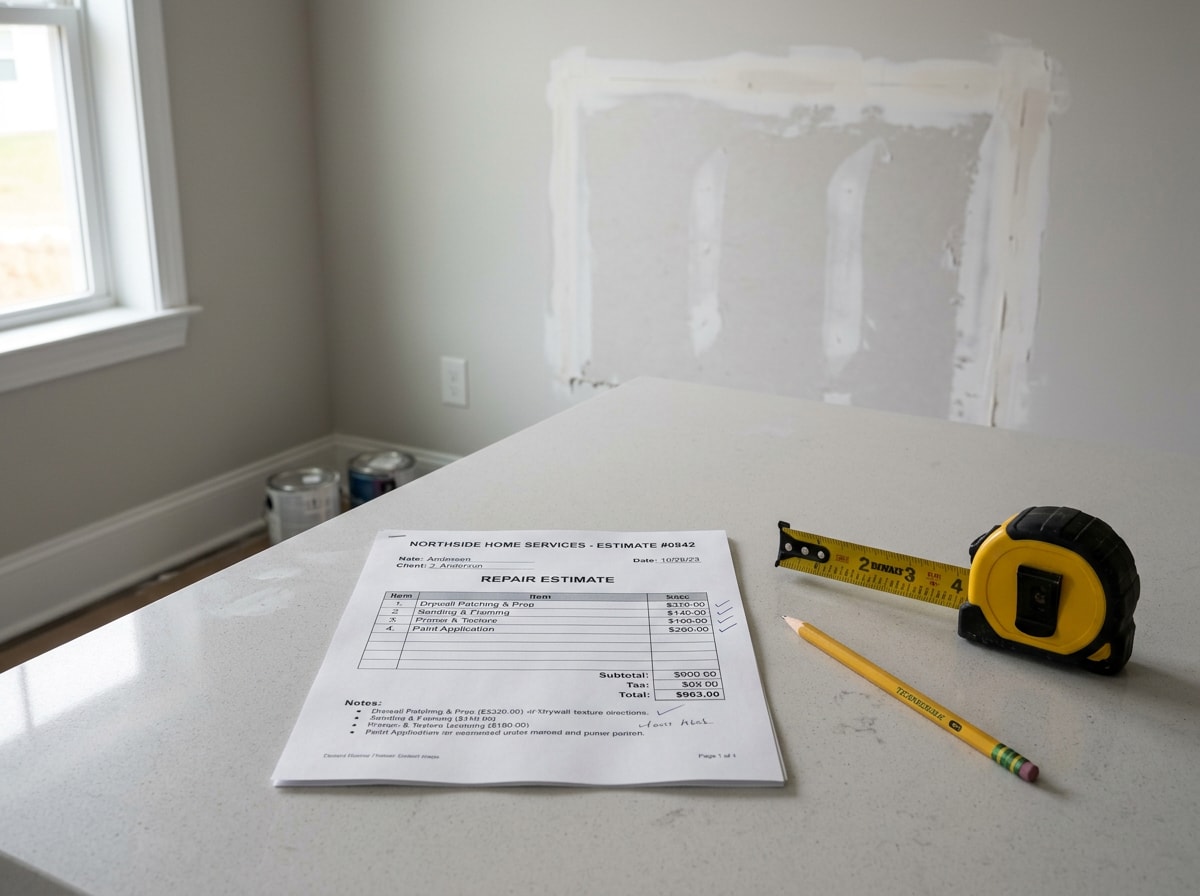
Here is the part we see from the inside. We write a lot of these repair estimates for Glendale homeowners after another crew walks off, and the ones that hold up in a hearing are line-itemed against the original scope: demo, substrate repair, materials, labor, permit and inspection costs, each priced separately. A single lump-sum "fix everything, $18,400" number gets picked apart. If you need that kind of documented scope, our general contractor team can walk the project and put it in writing.
Filing a Complaint With the Arizona Registrar of Contractors
For many Maricopa County homeowners the ROC is the first move. It costs little, moves faster than litigation, and puts real pressure on a licensed contractor who wants to keep working.
What the ROC can do: investigate, send an inspector, order corrective work, and discipline the license. A corrective work period must be at least 15 days, and you have to allow the contractor reasonable access to make repairs.
What it cannot do: act as a civil court. It does not award lost rent, consequential damages, or compensation for your time.
The Recovery Fund, With Real Numbers
Most articles mention the Recovery Fund and stop. The caps are specific.
A fund award is issued up to $30,000 per claimant and up to $200,000 per license.
Fund monies may not be awarded for attorney fees or costs, except in contested cases appealed to Superior Court.
And the catch that reverses a lot of strategy: the Fund is not available to a homeowner who dealt with an unlicensed contractor, or with a contractor whose license was inactive, expired, cancelled, revoked, or suspended at the time of the contract.
So an unlicensed contractor gives you leverage in court but removes the Fund entirely. Verify the license before you sign, not after. Our walkthrough on how to verify a licensed contractor in Arizona covers the lookup step by step.
The ROC Deadline Is Shorter Than the Court Deadline
This is where homeowners lose the option. For new construction, complaints against licensed contractors must be filed within two years from the close of escrow or actual occupancy, whichever occurred first. For remodel or repairs, the deadline is two years from the date work was last performed.
Negotiating with the contractor does not pause that clock. Confirm current requirements on the Arizona Registrar of Contractors complaint page before you assume you still have time. Homeowners across our Glendale service area lose this route by waiting for a promised fix that never comes.
Suing a Contractor in Arizona Small Claims Court
For modest losses, small claims is the practical route. It is a division of the Justice Court, built for self-represented parties.
The Dollar Limit Changed, and Most Articles Are Wrong
Nearly every competing guide still quotes $3,500. That figure is out of date.
Maricopa County Justice Courts' own small claims filing information now states the plaintiff may file for any amount not to exceed $5,000.00, and a larger claim may be reduced to $5,000.00 with the remaining amount waived.
A claim may not be split by filing two separate actions.
Older county guides and statewide PDFs still show the $3,500 figure, so confirm the current cap with your precinct on the Maricopa County Justice Courts small claims page before filing.
Two other tradeoffs matter. Parties do not have the right to appeal a small claims decision, which is final and binding. Attorneys generally cannot participate unless both sides agree in writing.
How to File: Step by Step
- Identify the correct precinct.
The precinct for small claims depends on where the transaction, agreement, or dispute occurred, and generally this is the address of the person or business named as defendant.
- Get the small claims complaint form from the court clerk or the Justice Courts website.
- Name the defendant correctly. Suing "Bob's Remodeling" when the license belongs to Bob's Remodeling LLC can cost you the judgment. Pull the exact entity name and statutory agent from the Arizona Corporation Commission.
- Pay the filing fee and request the summons. Fee schedules are posted by the court and change, so check before you go.
- Complete proper service on the statutory agent or authorized person, then file proof of service before the hearing.
Collecting Your Judgment After You Win
A judgment is a declaration that you are owed money. It is not payment, and the court will not chase the contractor for you.
Your enforcement toolkit includes a writ of garnishment against bank accounts or receivables, a writ of execution against non-exempt property, and recording an abstract of judgment, which creates a lien on Arizona real property the contractor owns in that county.
You will need a certified copy of the judgment from the clerk before enforcement can begin.
Statute of Limitations for Contractor Disputes in Arizona
Several clocks run at once on different triggers. The shortest one that applies to your claim controls.
| Claim or route | Typical clock | What starts it | Where you file |
|---|---|---|---|
| Written contract (A.R.S. 12-548) | 6 years | Breach of the written agreement | Justice or Superior Court |
| Oral contract (A.R.S. 12-543) | 3 years | Breach of the unwritten agreement | Justice or Superior Court |
| Negligence, property damage (A.R.S. 12-542) | 2 years | Damage occurs or is discovered | Justice or Superior Court |
| Statute of repose (A.R.S. 12-552) | 8 years | Substantial completion | Bars suit regardless of discovery |
| Latent defect found in year 8 | Plus 1 year | Discovery during the eighth year | Justice or Superior Court |
| ROC complaint (A.R.S. 32-1162) | 2 years | Completion, escrow close, or occupancy | Registrar of Contractors |
Arizona's statute of limitations is six years for written contract claims under A.R.S. 12-548 and three years for oral contract claims under A.R.S. 12-543, with the clock generally running from the date of the breach.
Substantial completion generally means the earliest of first occupancy or use, availability for use under the contract, or final inspection by the permitting authority. For a permitted Glendale project, that authority is the city.
What Does It Cost to Sue a Contractor in Arizona?
Costs fall into four buckets.
- ROC complaint: effectively free to file.
- Justice Court filing fees: set by the court and posted publicly, typically modest for small claims.
- Service of process: roughly $40 to $100 through a private process server, less through the constable.
- Attorney fees: the real variable in a Superior Court defect case, driven mostly by whether expert testimony is needed.
Two offsets change the math. Prevailing parties can usually recover filing and service costs, and Arizona permits discretionary attorney fee awards in contested contract actions under A.R.S. 12-341.01. That possibility drives a lot of settlements.
Run the comparison honestly. If the repair estimate is $6,800 and the Superior Court path costs more than that in fees, the ROC route plus a corrective work order may get you a finished house faster than a win would.
Repairing the Damage After the Dispute
Winning does not fix drywall. Most homeowners still need someone to finish what the last contractor left.
We handle that side of it: home remodeling, kitchen remodeling, bathroom remodeling, drywall repair, and flooring replacement after defective work is torn out. You can see completed work on our projects page or start at our homepage.
If you need a documented repair scope for a claim or a hearing, get a free estimate and we will put the numbers in writing.
This article is general information about Arizona procedure, not legal advice. For advice on your specific dispute, consult a licensed Arizona attorney.
FAQ
Can I sue an unlicensed contractor in Arizona?
Yes. You can sue an unlicensed contractor in Arizona small claims court the same way you would sue a licensed one. You also gain leverage, because Arizona law generally bars an unlicensed contractor from recovering payment for the work. The trade-off is that the Recovery Fund is closed to you.
How do I find out if my Glendale contractor was licensed?
The Registrar of Contractors maintains a searchable license database, and you should pull it before you file. Search by name, license number, or business name, then screenshot the result with the date visible. At a hearing, the burden of showing the contractor was unlicensed falls on you.
What is the deadline to file an ROC complaint?
Two years. For new construction it runs from the earlier of close of escrow or actual occupancy, and for a remodel or repair it runs from completion of the specific project.
How much can the Recovery Fund pay me?
The maximum individual award from the residential contractors' recovery fund is $30,000.
The maximum payout per residential contractor's license is $200,000.00. It pays actual damages only and cannot produce a net gain.
The contractor took my deposit and never started. What now?
That is one of the cleanest cases there is. If the claimant paid a deposit or down payment and no work was performed or materials delivered, actual damages are the exact dollar amount of the deposit plus ten percent annual interest from the date it was paid. File the ROC complaint and preserve your bank records.
Can I cancel an arbitration clause the contractor put in the contract?
Arizona gives residential buyers a narrow statutory right to cancel a binding arbitration clause in a residential construction contract, but only within a short window after signing, and the cancellation must be in writing. If that window closed, arbitration will likely control. Confirm the current deadline with an attorney before relying on it.
What if the work was finished but the quality is terrible?
Shoddy workmanship is actionable as breach of contract even when the contractor was fully licensed and considers the job done. It can also breach the implied warranty. Remember the standard: reasonableness measured against ordinary competent work, not perfection.
Can I use the ROC and the courts at the same time?
Generally yes. The administrative track and the civil track run on separate clocks and separate rules. Many homeowners file the ROC complaint first to protect the two-year deadline, then decide on litigation after the inspection result.
---
Written by the licensed general contractors at Blackridge Contracting, an Arizona remodeling and water damage restoration company serving Glendale, Peoria, Phoenix, and the West Valley. We are hired regularly to document and complete work abandoned by other contractors. Reach the team through our contact page.